Embracing CAD Technology in India's Handloom Industry

Updated: 6 days ago
The Rich Heritage of India's Handloom Industry
India's handloom industry stands as a testament to the country's rich cultural heritage. It showcases artistic excellence and traditional craftsmanship. For centuries, skilled weavers have crafted unique fabrics, sarees, shawls, and home furnishings. These creations are admired worldwide. However, in today's competitive textile market, traditional methods often fall short. Changing consumer demands, shorter product cycles, and rising quality expectations challenge artisans.
To stay competitive while preserving craftsmanship, the handloom sector must adopt modern technology. One promising development is the use of Computer-Aided Design (CAD) Software for textile design and weaving preparation. Open-source CAD solutions make digital textile design accessible, affordable, and practical for artisans, designers, training institutes, and weaving clusters across India.
The Current State of India's Handloom Industry

The handloom sector employs millions of artisans. It significantly contributes to India's rural economy. Its strengths include:
Unique handcrafted products
Traditional motifs and techniques
Eco-friendly production processes
Low energy consumption
Flexible small-scale manufacturing
Strong cultural and heritage value
Despite these advantages, handloom weaving faces fierce competition from mechanized textile production systems. These systems produce fabrics faster and at lower costs.
Major Challenges Faced by Handloom Artisans

1. Time-Intensive Design Development
Before weaving, artisans must complete several preparatory tasks:
Motif creation
Graph making
Color planning
Design calculations
Sample preparation
These tasks consume a significant portion of total production time.
2. Manual Design Errors
Traditional graphing methods often lead to:
Pattern inaccuracies
Repetition mistakes
Colour mismatches
Production defects
Correcting these errors increases both cost and production time.
3. High Cost of Commercial CAD Software
Many textile CAD systems are expensive. They are designed primarily for large textile mills and export houses. For individual artisans and small weaving units, investing in costly software licenses is often impossible.
4. Lack of Technical Training
Many skilled weavers have exceptional design knowledge. However, they have limited exposure to modern digital tools.
5. Increasing Market Competition
Consumers demand:
Innovative designs
Faster delivery
Product customization
Digital previews before manufacturing
Meeting these expectations requires faster and more efficient design processes.
Why CAD Technology Matters in Handloom Design
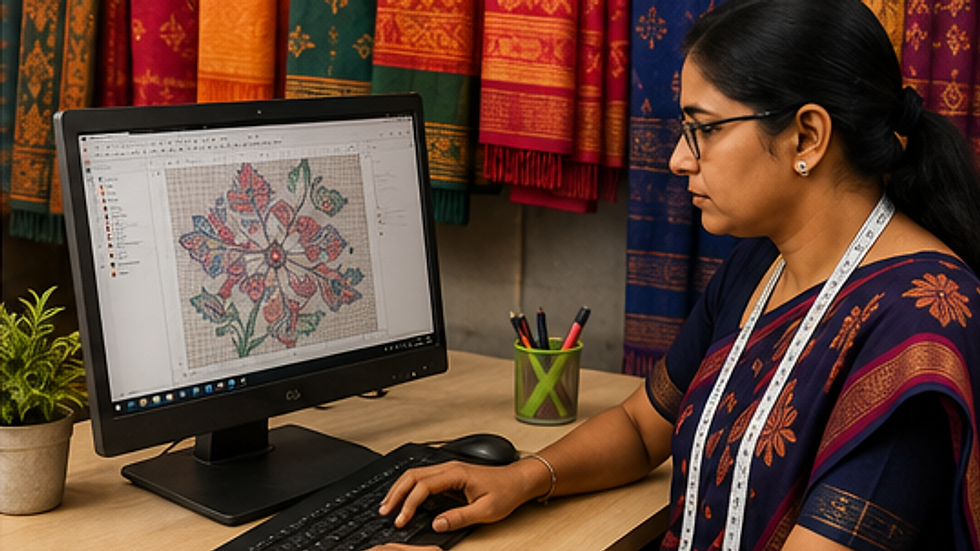
Computer-Aided Design (CAD) has become essential in modern textile production. CAD enables designers to:
Create designs digitally
Modify patterns instantly
Experiment with color combinations
Simulate fabrics before production
Store and reuse designs
Share designs electronically
Instead of spending days creating manual graphs, designers can complete similar work within hours.
What is Open-Source Textile CAD Software?

Open-source CAD software refers to design tools that are freely available for use, modification, and distribution. Unlike commercial software, open-source solutions provide:
Cost Benefits
No license fees
No annual subscription costs
Lower implementation expenses
Accessibility
Easy availability
Wider adoption among artisans
Suitable for educational institutions
Flexibility
Continuous improvement
Community-driven development
Customizable features
Sustainability
Long-term affordability
Increased technology penetration in rural areas
Key Applications of Open-Source CAD in Handloom Weaving

1. Weave Design Development
CAD software enables users to:
Create weave structures
Generate drafting plans
Develop lifting patterns
Visualize weave effects
Benefits include:
✔ Faster design creation
✔ Improved accuracy
✔ Easier experimentation
2. Motif and Artwork Development
Traditional motif creation is laborious. Digital tools allow designers to:
Draw motifs digitally
Edit designs quickly
Resize patterns
Create repeat layouts
Generate graph designs automatically
This significantly reduces development time.
3. Fabric Simulation
One valuable feature of CAD software is fabric visualization. Designers can:
Preview woven effects
Test color combinations
Assess pattern placement
Evaluate fabric appearance before weaving
This eliminates unnecessary sample production.
4. Product Visualization
Modern CAD tools allow users to view complete product layouts such as:
Sarees
Dupattas
Stoles
Scarves
Home furnishing products
By visualizing the final product beforehand, designers can make improvements before production begins.
Benefits of Open-Source CAD for Handloom Artisans
Reduced Design Time
Digital tools automate many repetitive tasks. This allows artisans to focus on creativity instead of manual calculations.
Improved Product Quality
Digital accuracy minimizes design errors and improves consistency.
Lower Production Costs
By reducing sampling requirements and material wastage, CAD contributes directly to cost savings.
Better Market Responsiveness
Designers can quickly develop new collections based on emerging fashion trends.
Enhanced Customer Communication
Digital previews enable customers to visualize products before production. This improves confidence and reduces revisions.
Bridging Traditional Knowledge and Modern Technology

Technology should not replace traditional craftsmanship. Instead, it should enhance it. Open-source CAD software enables artisans to:
Digitize traditional motifs
Preserve regional weaving knowledge
Archive historical designs
Create innovative adaptations of traditional patterns
This approach ensures that cultural heritage remains relevant in modern markets.
Opportunities for Educational Institutions

Textile institutes, design schools, and training centers can benefit greatly from open-source CAD software. Advantages include:
No expensive software licenses
Hands-on learning opportunities
Industry-relevant skill development
Increased employability of students
Educational institutions can introduce CAD training without significant infrastructure investment.
Preparing the Next Generation of Weavers
One of the biggest challenges facing the handloom sector is attracting younger generations. Young professionals are more comfortable with:
Computers
Digital design tools
Visual interfaces
Technology-enabled workflows
By integrating CAD into handloom practices, the industry becomes more appealing to future designers and entrepreneurs.
The Future of Handloom Weaving

The future belongs to artisans who can combine:
Traditional Craftsmanship
Digital Design Skills
Market Understanding
This combination creates opportunities for:
Global market access
Product innovation
Increased productivity
Sustainable livelihoods
Open-source CAD software can transform handloom weaving from a purely traditional occupation into a technology-enabled creative industry.
Conclusion
India's handloom sector possesses unmatched artistic value and cultural significance. However, to thrive in modern markets, artisans need access to affordable and effective digital tools. Open-source CAD software offers a practical solution. It makes advanced textile design technology accessible to everyone—from individual weavers and designers to training institutions and weaving clusters.
By reducing design time, improving accuracy, lowering costs, and supporting innovation, open-source CAD technology is helping create a stronger, more competitive, and sustainable future for India's handloom industry. The goal is not to replace traditional skills but to empower artisans with tools that allow them to preserve their heritage while embracing new opportunities in the digital age.


Comments